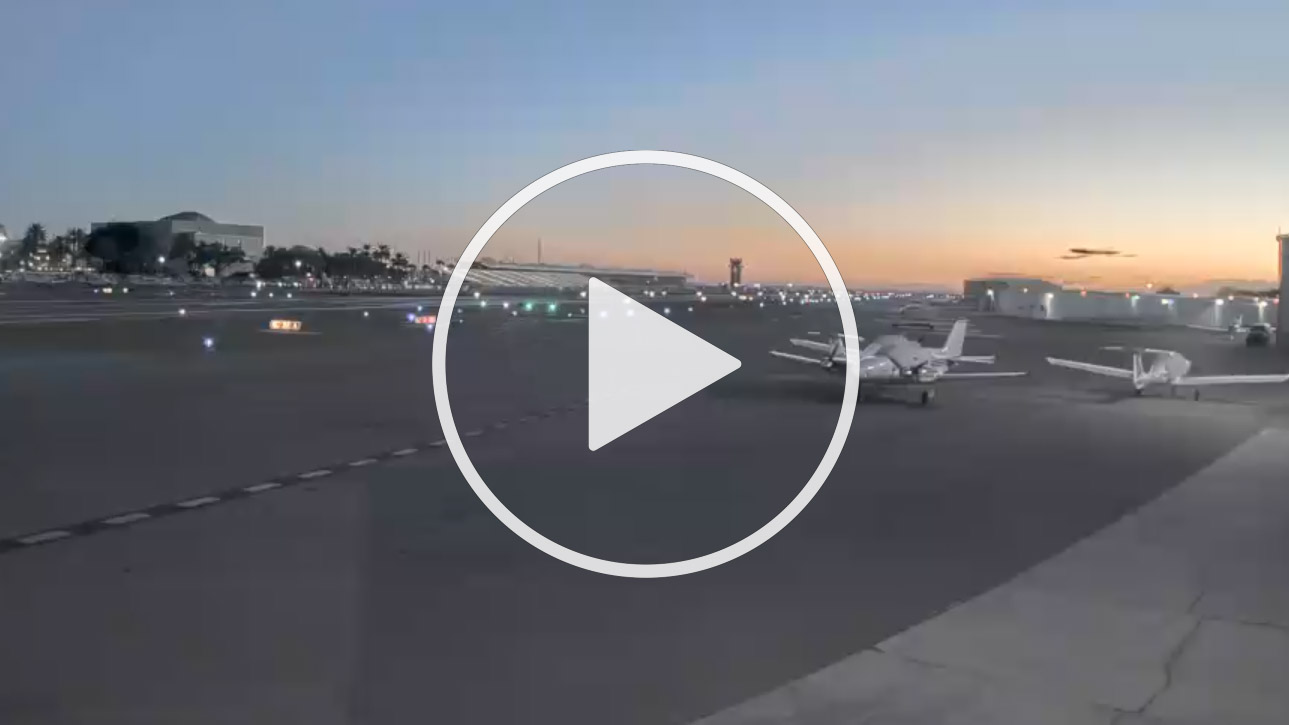
Albert Whitted Airport Live Cam
Overlooking Tampa Bay, a public airport in St. Petersburg, Pinellas County
Hosted by:
- Albert Whitted Airport
- 107 8th Ave SE - St. Petersburg
- Florida 33701 - United States
- (727) 755-1359
- [email protected]
- https://stpeteair.org/
What You're Watching
This camera shows Toponymy St. Petersburg, also known as Petrograd and Leningrad at different times in history, has a rich toponymic history that reflects its diverse cultural influences and storied past. Here are some key aspects of toponymy in St. Petersburg: Origins of the City's Name: St. Petersburg was founded in 1703 by Peter the Great, who named it in honor of Saint Peter, the patron saint of Peter the. The live feed streams continuously in real time, giving viewers a direct window into current conditions at this location.
Best Times to Watch
| Time / Period | What to expect |
|---|---|
| Early mornings (6–9am local) | Quietest period — best light on the water; local fishermen or surfers checking conditions |
| Midday (11am–2pm) | Peak beach activity in season; clearest water visibility in sunlight |
| Sunset | Often the most visually dramatic period — golden light on the water |
| Storm/post-storm | Check wave size and beach conditions before visiting |
Quick Facts
- 📍 Location: Albert Whitted Airport, Florida, USA
- 🕐 Timezone: ET — EST (UTC-5) / EDT (UTC-4) in summer
- 🌐 Stream: Live 24 hours a day, 7 days a week
- 📡 Source: https://www.iplivecams.com/live-cams/albert-whitted-airport-downtown-st-pete-florida-united-states/
- 🔍 Find more: Browse nearby cameras using the search bar above
History & Context
Toponymy St. Petersburg, also known as Petrograd and Leningrad at different times in history, has a rich toponymic history that reflects its diverse cultural influences and storied past. Here are some key aspects of toponymy in St. Petersburg: Origins of the City's Name: St. Petersburg was founded in 1703 by Peter the Great, who named it in honor of Saint Peter, the patron saint of Peter the Great. The name "Petersburg" (Петербург) is a Germanic-style name, reflecting the influence of the German culture on Peter the Great and the early city's administration. Historical Renaming: Throughout its history, St. Petersburg has undergone several name changes reflecting the shifting political and ideological priorities of the ruling powers. It was renamed Petrograd in 1914, following the outbreak of World War I, to sound less Germanic. After the Russian Revolution, it was renamed Leningrad in 1924, in honor of Vladimir Lenin. However, in 1991, following the collapse of the Soviet Union, the city reverted to its original name, St. Petersburg. Street Names: St. Petersburg has a rich tradition of naming its streets after significant historical figures, cultural icons, and famous landmarks. For example, Nevsky Prospect, the city's most famous street, is named after Alexander Nevsky, a medieval Russian prince and national hero. Other streets are named after poets, composers, scientists, and writers who have made significant contributions to Russian culture. Toponyms Reflecting the City's Geography: Many of St. Petersburg's toponyms reflect the city's unique geography, which is characterized by its many rivers, canals, and islands. For example, Vasilievsky Island, one of the city's largest islands, is named after Basil III, a sixteenth-century Russian tsar. Other toponyms, such as the Griboedov Canal, the Moika River, and the Fontanka River, are named after prominent waterways in the city. Soviet-era Toponyms: During the Soviet era, many of the city's toponyms were changed to reflect communist ideology and revolutionary heroes. For example, Palace Square, the site of many important historical events, was renamed Revolution Square, while the city's central station, Moskovsky Station, was renamed October Station in honor of the October Revolution.
Nearby Cameras
- Browse more cameras from Florida, USA using the search bar above
- Explore the full live cam directory for cameras in the same region
- Check the countries index for international cameras near this location
