Colosseum and the ruins of the Ludus Magnus Live Cam
An elliptical amphitheater in stone and concrete, located in the center of Rome
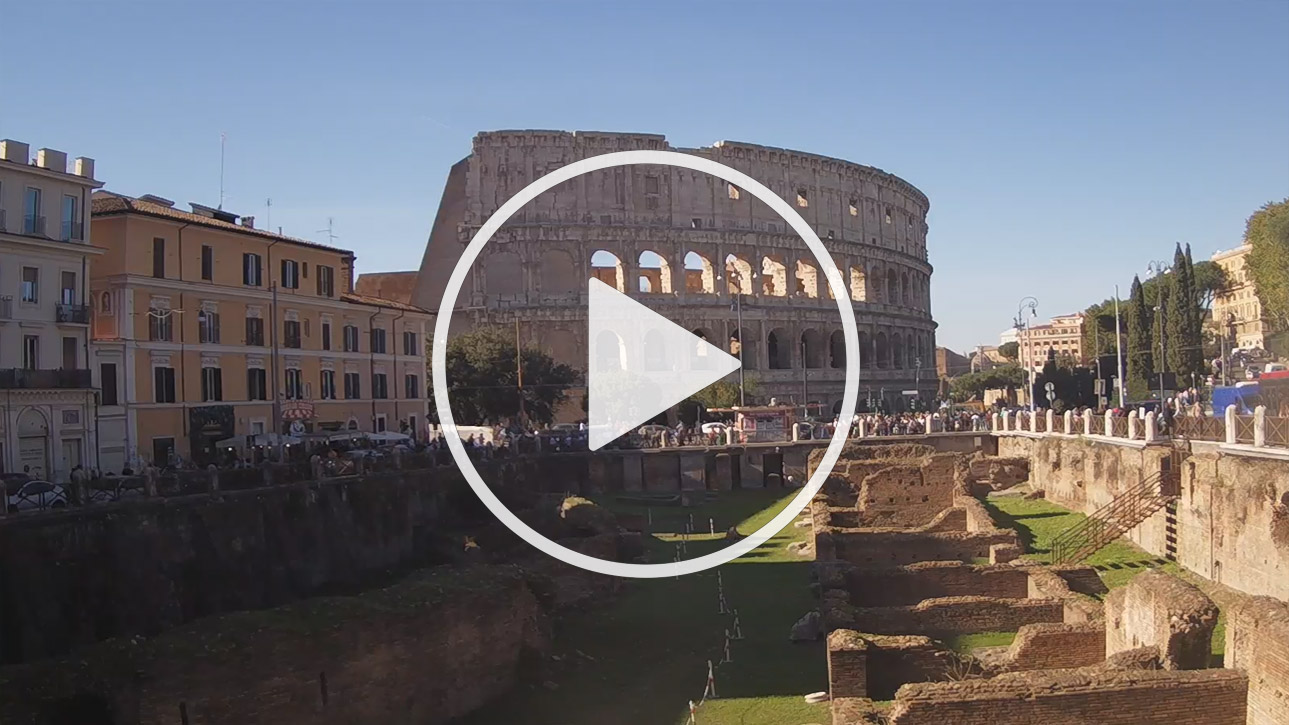
What You're Watching
This camera provides a live view of Colosseum and the ruins of the Ludus Magnus. The Colosseum: Engineering Mastery in Ancient Rome The Colosseum, known in ancient times as the “Flavian Amphitheatre,” stands as one of the most remarkable feats of Roman engineering and architecture. Constructed between 70-80 AD under the rule of Emperor Vespasian and his successor, Titus, the Colosseum was built to entertain the masses with gladiatorial contests, animal hunts, and other publ.
Best Times to Watch
| Time / Period | What to expect |
|---|---|
| Early mornings 6–9am local | Quietest — best light on water; surfers and fishermen active |
| Midday (11am–2pm) in season | Peak beach activity; clearest water visibility in sunlight |
| Sunset | Golden light — often most visually dramatic period |
| Storm / approaching weather | Check wave size and conditions before visiting |
Quick Facts
- 📍 Location: Colosseum and the ruins of the Ludus Magnus, Italy
- 🕐 Timezone: CET (UTC+1) / CEST (UTC+2) in summer
- 🌐 Stream: Live 24 hours a day, 7 days a week
- 📡 Page: https://www.iplivecams.com/live-cams/colosseum-and-the-ruins-of-the-ludus-magnus-rome-italy/
History & Context
The Colosseum: Engineering Mastery in Ancient Rome
The Colosseum, known in ancient times as the “Flavian Amphitheatre,” stands as one of the most remarkable feats of Roman engineering and architecture. Constructed between 70-80 AD under the rule of Emperor Vespasian and his successor, Titus, the Colosseum was built to entertain the masses with gladiatorial contests, animal hunts, and other public spectacles. Located in the heart of Rome, it could host up to 50,000 spectators, a testament to its grandeur and the ambition of the Roman Empire.
Architecturally, the Colosseum is an elliptical structure measuring approximately 189 meters in length and 156 meters in width, with a height reaching around 48 meters. Its multi-tiered seating arrangement was designed to accommodate spectators from all social classes, divided into sections that reflected Rome’s societal hierarchy. The Colosseum's construction employed over 100,000 cubic meters of travertine stone, along with tuff, brick, and marble, all held together by iron clamps instead of mortar, showcasing the Romans’ advanced building techniques and an understanding of structural stability.
Nearby Cameras
- Search for more cameras from this region using the live cam directory
- Browse by country at the countries index
- Browse US cameras by state at U.S. Webcams
